Posters: Formation and Issues in Expression
The article explores the evolution of posters from fine art to modern design, highlighting the distinction between commercial advertising and propaganda in terms of their visual strategy, target audience, and communicative goals
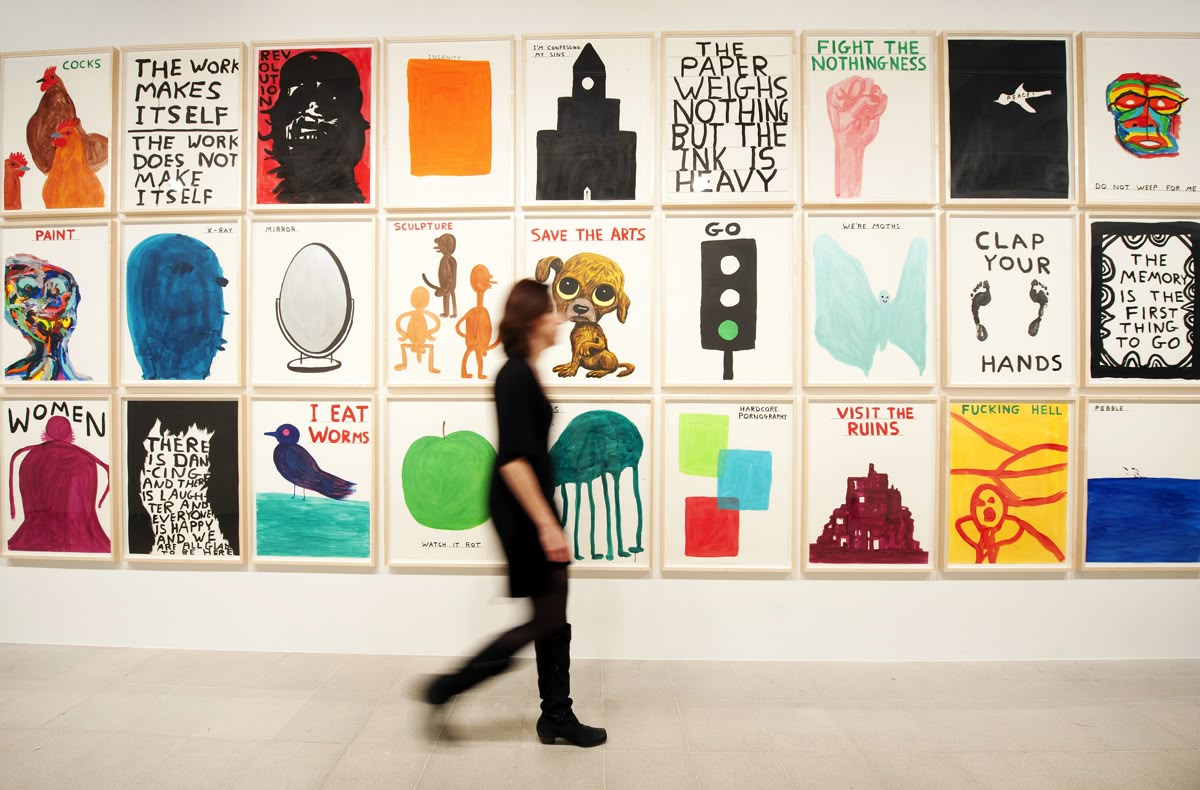
A poster is a form of media and a method of visual communication consisting of two primary elements: imagery and text. Posters serve various purposes, from promoting a specific product or service to simply conveying an idea or perspective to the community.
Although the need for communication has existed for centuries, it wasn't until the late 19th century that the poster was truly born. This was primarily because previous printing techniques could not meet the demand for complex imagery. By 1880, when the lithographic process was perfected, printing images became easier, facilitating mass production.
Since mass media like radio or television did not yet exist, posters became the optimal method for announcing and promoting information. Merchants seized this opportunity, creating large-scale visuals to introduce products and pasting them in public spaces to attract customers.
The Golden Age and the Painter’s Influence
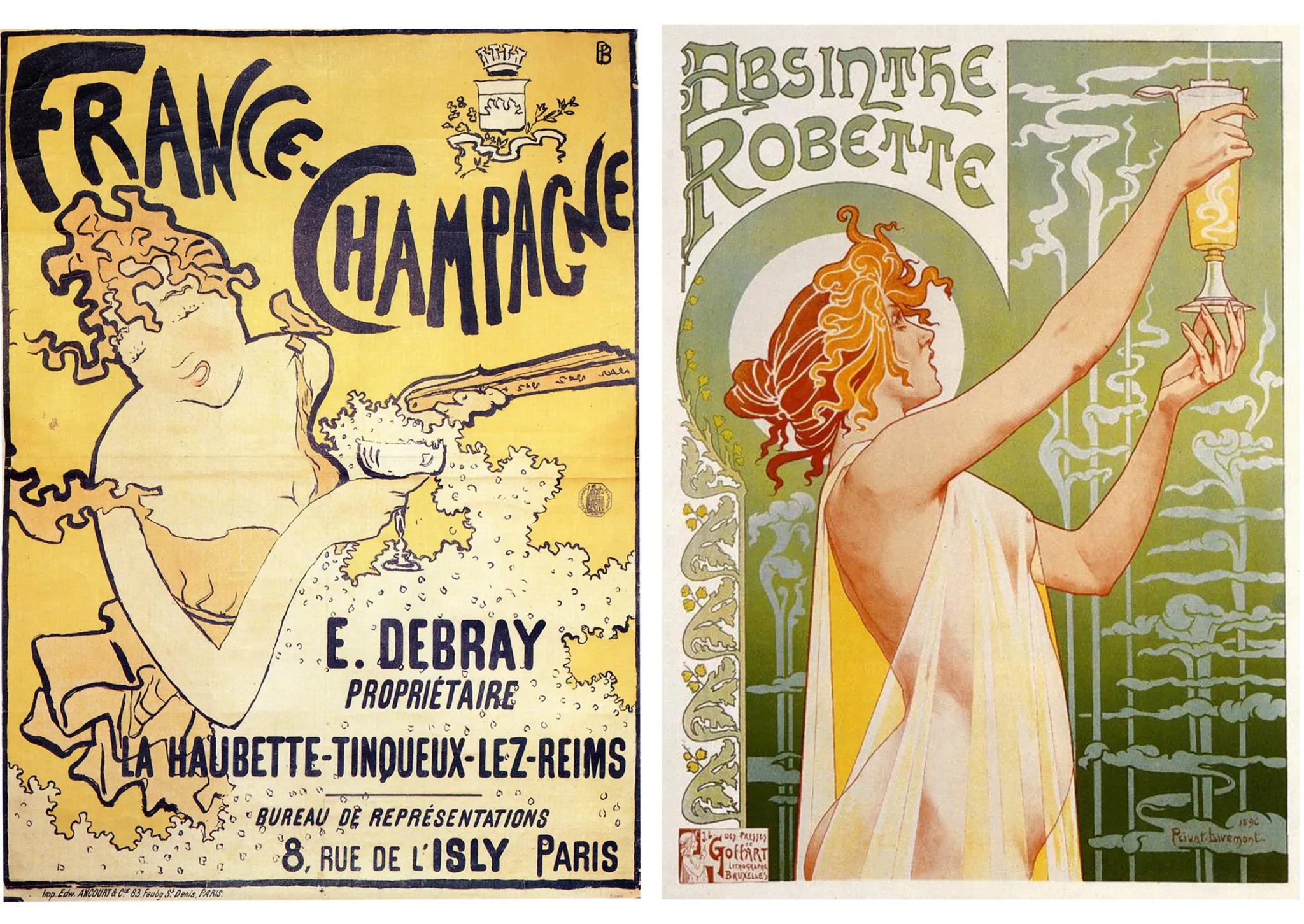
The use of posters for advertising and sales became immensely popular between the late 19th and early 20th centuries. Eras such as La Belle Époque and Art Nouveau are considered the Golden Age of the Poster. At this time, the term "Designer" did not exist; posters were created by fine artists, including prominent names like Pierre Bonnard, Henri de Toulouse-Lautrec, and Alphonse Mucha.
Because the line between painting and design had not yet been drawn, posters from this period were deeply painterly. Images of women were a recurring theme—circus girls, dancers, and young maidens with flowing hair and dresses dominated the medium. While these posters were elaborate in execution, they were not optimized for communication. Despite being advertisements intended to sell products, the actual product was often a secondary element in the layout. Without the text, one would often have no idea what the poster was actually promoting.
Fountain (1917) by Marcel Duchamp
The Shift to Minimalism: Plakatstil
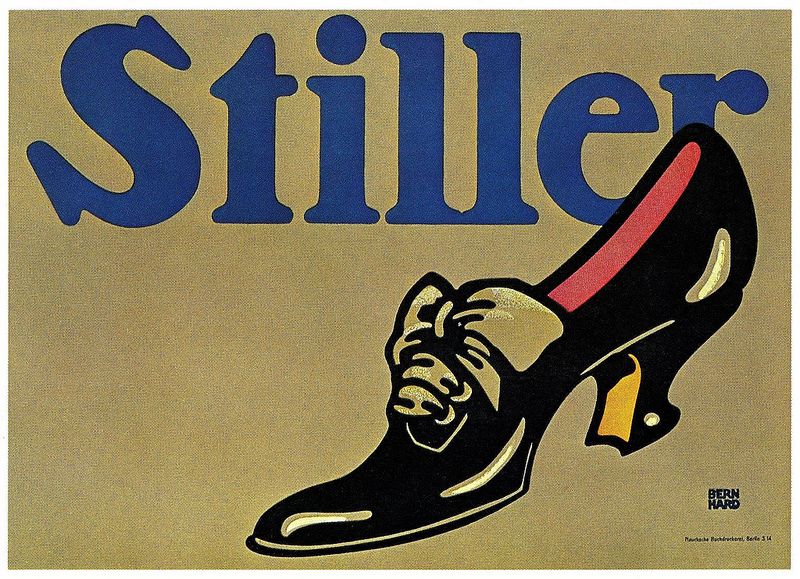
To address this lack of efficiency, a style called Plakatstil (Poster Style) emerged in Germany around 1900. This was a minimalist approach born from a philosophy and execution diametrically opposed to the previous era. In a Plakatstil poster, the product image was enlarged to become the central element. The visual style was simplified through: Minimalist rendering with flat shapes, no shading or decorative flourishes. A focus solely on the product and Typography.
Although this movement was short-lived, it played a pivotal role in the history of graphic design. It marked the first step in separating Graphic Design from Fine Art, creating a boundary between "art" and "design."
International Dada Fair, Galerie Otto Burchard, Berlin, 1920
Modern Evolution and Swiss Design
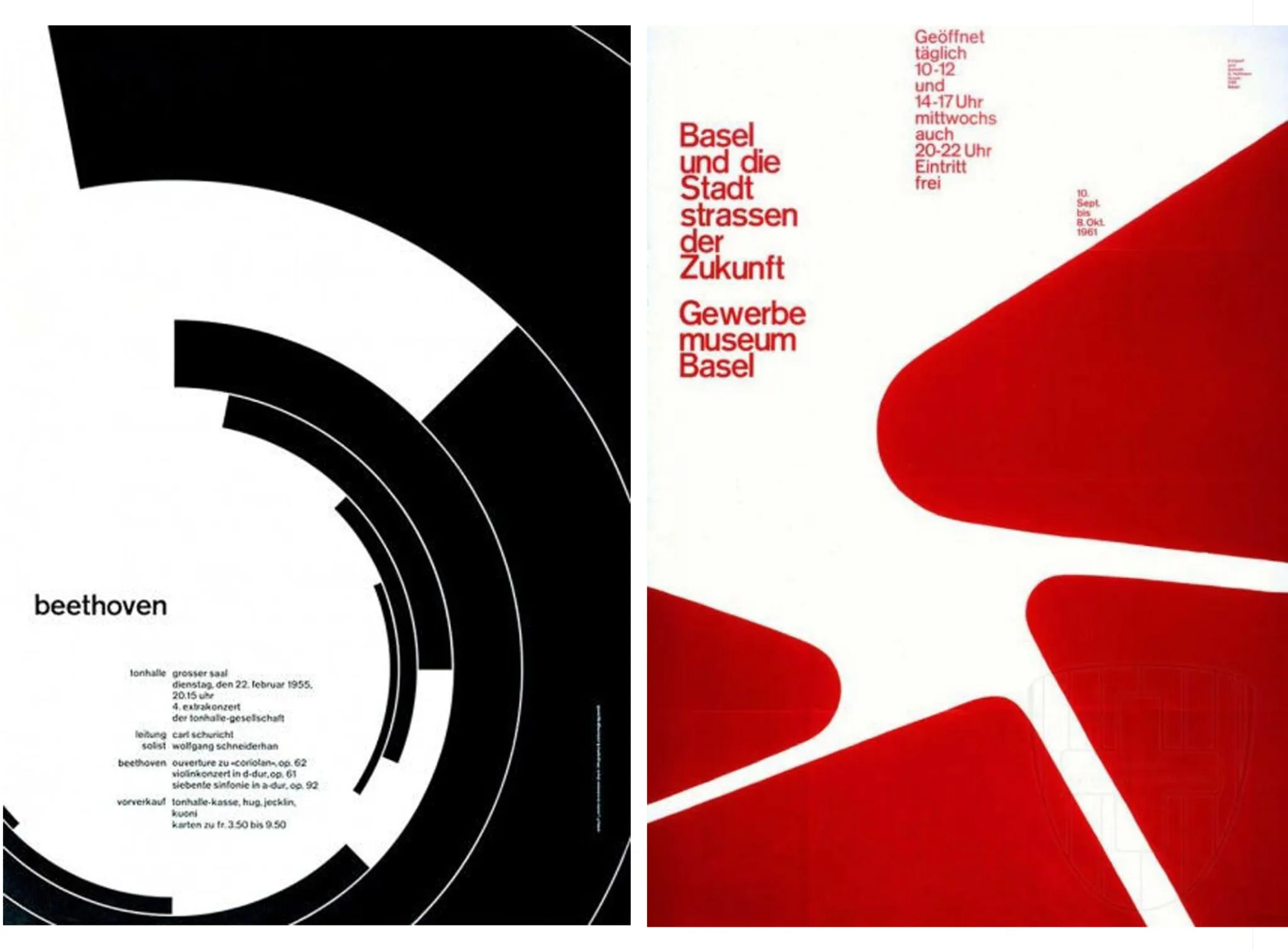
Influenced by Modern Art movements such as Constructivism, Neo-Plasticism, and particularly the Bauhaus, the form of the poster evolved in more modern and exciting directions. A standout development was Swiss Design (The International Typographic Style) in the 1950s.
Inheriting the principles of minimalism and prioritizing functionality, Swiss Design was defined by modernity and optimized information delivery. Beyond just separating design from painting, Swiss Design established its own manifestos and rules, such as the Grid System and the birth of the legendary typeface Helvetica. Through this movement, Graphic Design finally achieved recognition for its vital role and importance in media and advertising.
International Dada Fair, Galerie Otto Burchard, Berlin, 1920
Propaganda vs. Advertising: The Visual Divide
Parallel to advertising design, another form emerged: propaganda design. As we entered the 20th century and faced two World Wars, governments launched propaganda campaigns to garner public support, calling for both spiritual and material contributions. Common themes during wartime included vilifying the enemy, inciting public sentiment, encouraging military enlistment, and soliciting financial support.
During World War I (1914) and World War II (1939), while advertising posters were optimizing their form and moving toward modern design, propaganda posters took a completely different path. Propaganda is always highly intuitive, featuring characters with roles clearly defined by their attire and actions. This could be the military calling for recruits, soldiers fighting on the front lines, or the "home front" represented by women and children—all accompanied by clear, fierce emotions. These posters consistently utilized realistic illustration with sharp, high-contrast imagery to urge the viewer toward immediate action.
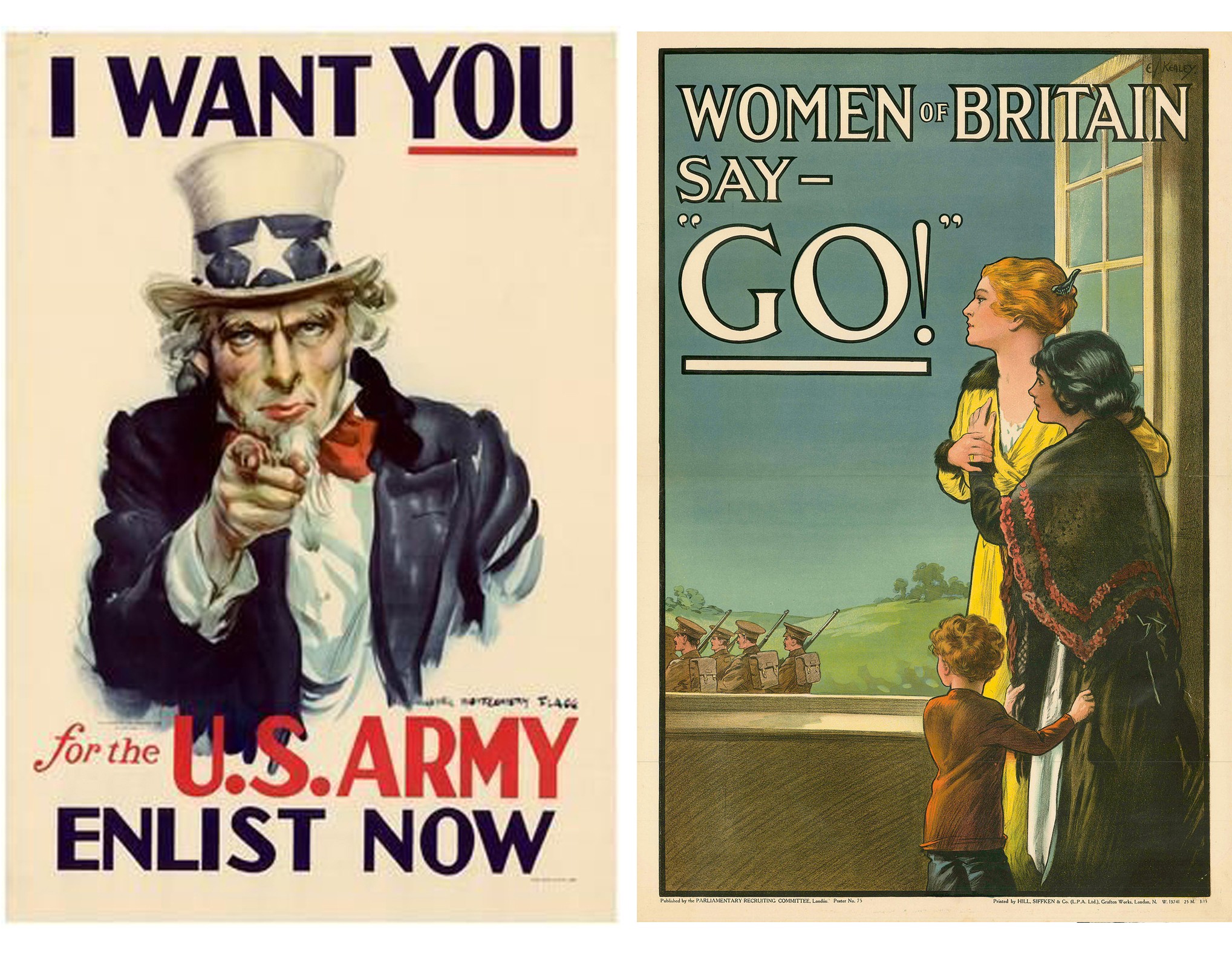
International Dada Fair, Galerie Otto Burchard, Berlin, 1920
After the wars, propaganda shifted toward goals like increasing production, social responsibility, and promoting national consciousness. Despite the change in content, the execution remained simple and direct. Essentially, both advertising and propaganda aim to communicate a message and drive a specific belief or action. However, while advertising design increasingly demands technical sophistication and aesthetic depth, propaganda design has maintained its straightforward, intuitive method.
This consistency in propaganda’s style is no coincidence. Understanding the difference between these two fields helps us better comprehend design and visual communication as a whole.
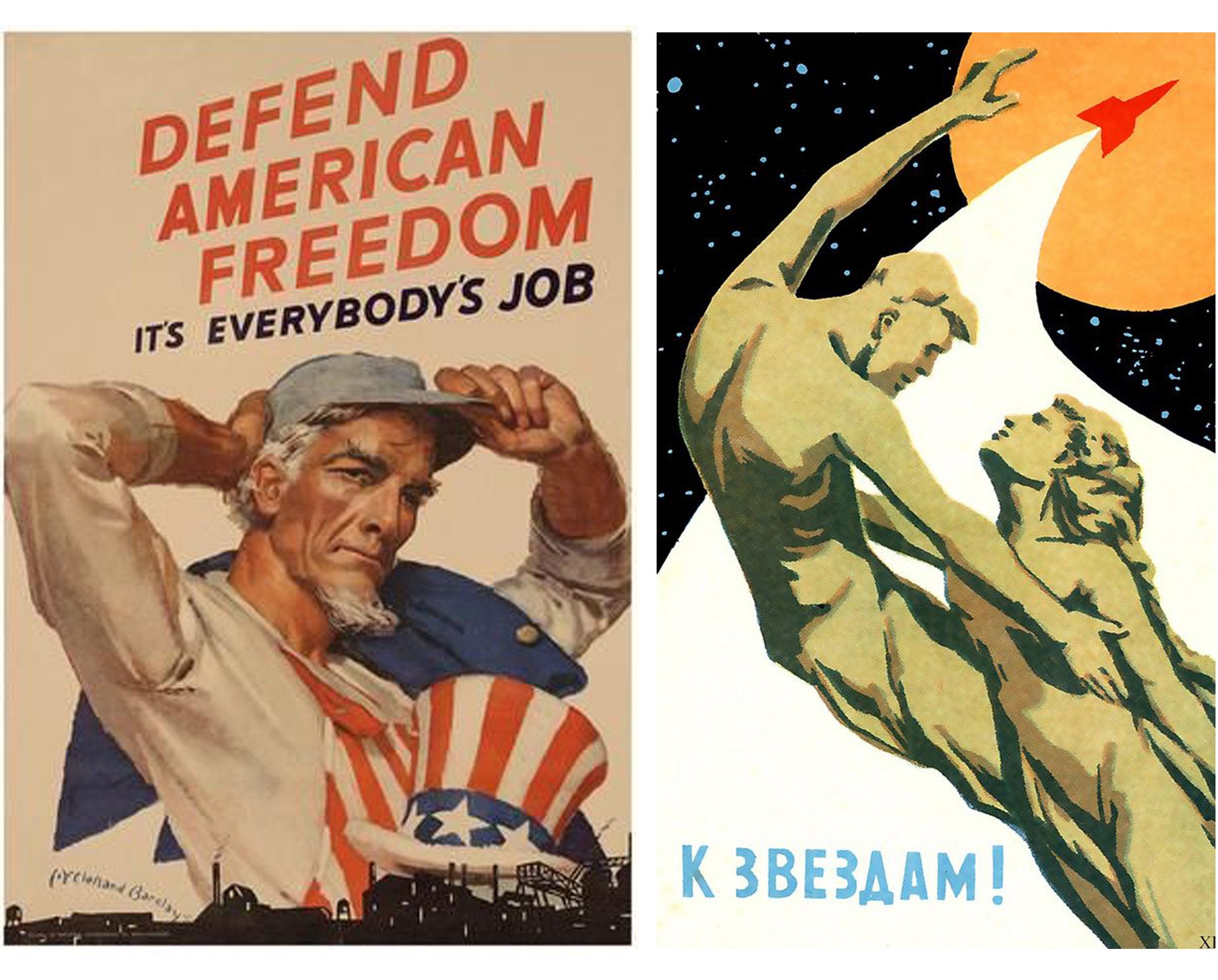
International Dada Fair, Galerie Otto Burchard, Berlin, 1920
Comparing Propaganda and Advertising Design
Topicality (Current Events)
Advertising design announces a product or service, whereas propaganda design announces an event or an issue happening in real-time. Therefore, propaganda is always topical. This relates directly to the viewer's belief; topical content involves "truths" that everyone knows exist. For instance, no one doubted the global COVID-19 outbreak even if they hadn't personally seen a patient, because it was reported everywhere. It became a pre-existing belief. Propaganda designers simply take that established truth and inject an ideology or perspective to guide community thinking. Thus, propaganda text is always concise and clear for easy consumption.
Advertising is different. We cannot simply say, "Our product is good, please buy it." This is ineffective because "a good product" is not a pre-existing belief in the customer's mind. Instead, we must persuade customers through attractive visuals to create curiosity, eventually leading to a purchase. Beyond being interesting, advertising must evoke the spirit of the product: Natural products should feel fresh and friendly, technology products should feel modern and versatile. In advertising, the task is not just to inform, but to create an emotional connection through sight (design) and sound (music/video).
Target Audience
Advertising design targets a specific group based on age, profession, and interests—those most likely to buy. Since different demographics have different aesthetic preferences, tailoring the design to the specific customer is essential.
Propaganda design, however, does not aim to sell. Its goals are political or social, and its audience is an entire nation. It aims to influence the mindset of the masses to create a collective ideology. Because the audience is so broad—spanning all levels of education and social status—the design must be intuitive and universally understood. Anyone, regardless of their aesthetic taste, must be able to grasp the message.
Conclusion
Though both fall under the umbrella of design and communication, who we are communicating to and what we are communicating determines our approach. Design is not like fine art; we always have a specific problem to solve. The solution must be optimized for the objective because beauty, interest, and novelty must always come after "correctness."
Note: This article compares graphic design (specifically posters) in the first half of the 20th century. Please do not mistake this for a comparison of modern-day design. The evolution of time has slightly changed the forms of media and advertising, which we will discuss in a future post. Thank you for reading.